
If someone just sent you “LMSS” and you are staring at your screen trying to work out what it means, you are not alone. LMSS is one of those short texting abbreviations that looks simple but carries more than one meaning, and the right answer depends on where you saw it and who sent it. In this guide, we explain the lmss meaning in text in plain English, show you what does lmss mean on Snapchat, Instagram, TikTok and WhatsApp, and give you 12 real chat examples so you can spot the meaning instantly next time it pops up in your messages.
Most of the time, when people ask what does lmss mean in texting, they are asking about a social media request. The most commonly cited lmss full form is “Like My Status and Share”, which is a friendly way of asking friends and followers to like a post or status and pass it on to more people. You will see it under WhatsApp Status updates, on Facebook posts, in Instagram Stories, on Snapchat, and in TikTok captions. But that is not the whole story.
LMSS Meaning in Text: Quick Answer
LMSS most commonly means “Like My Status and Share.” It is a social media abbreviation used to ask friends or followers to like a post or status and share it with more people. On video platforms, the same letters can also mean “Like My Status, Share, and Subscribe”. In private chats, some people use LMSS to mean “Let Me See Something”, asking you to send a photo, a screenshot, or proof of something. A smaller group uses it to mean “Like My Status Seriously” on Snapchat. Because the meaning changes with context, always check what the conversation is about before you reply. LMSS is pronounced letter by letter, L-M-S-S, and it is informal internet slang, not a formal abbreviation.
| Term | Details |
|---|---|
| Meaning | Like My Status and Share (most common) |
| Full Form | Like My Status and Share / Like My Status, Share, and Subscribe |
| Pronunciation | L-M-S-S (spoken letter by letter) |
| Category | Internet Slang / Social Media Abbreviation |
| Tone | Friendly, promotional, casual |
| Used On | WhatsApp, Facebook, Instagram, Snapchat, TikTok, messaging apps |
| One-Line Definition | LMSS is a social media abbreviation asking people to like and share someone’s post or status. |
What Does LMSS Mean in Text?
The most common lmss meaning in text is “Like My Status and Share”. When someone types LMSS, they are usually asking you to support their content. They want you to tap the like button on their post or status and then share it so that more people see it. It is a shortcut for a sentence that would otherwise read “Please like my status and share it with your friends.” Typing four letters is faster, and on social media, where everyone scrolls quickly, short requests get more attention.
This reading is the one that the biggest slang guides lead with. The guide at linezforlife.com says LMSS most commonly means “Like My Status, Share, and Subscribe” or “Like My Status and Share”, depending on the platform and the person using it. The guide at grammarreader.com says the same thing in even plainer words: in most cases, LMSS stands for “Like My Status and Share”, and it is commonly used on social media platforms where users want more engagement on their posts. Both pages describe it as a friendly request, not a rude one, and both place it firmly in the world of status updates, stories, and posts rather than in private one to one texting.
Here is how the request works in practice. A friend uploads a new profile picture on WhatsApp and adds “LMSS” to the caption. A classmate posts a photo from graduation on Facebook and writes “LMSS if you support me”. A small creator shares a new video and ends the caption with “LMSS”. In every case, the writer is doing the same thing. They are asking their audience for two small actions, a like and a share, because those two actions push the post in front of more people. Social media platforms reward posts that get early likes and shares, so a simple “LMSS” can genuinely help a post reach a wider audience.
It is worth understanding why people bother with the abbreviation at all. Typing “like my status and share” takes a few seconds, and on a phone keyboard, those seconds add up. LMSS packs the whole request into four letters. It also feels lighter than a full sentence. A full sentence can sound like begging, while LMSS reads like a casual nudge between friends. That is why it shows up most often among friends, classmates, and followers rather than in formal or professional messages.
The meaning is almost always promotional. When you see LMSS attached to a photo, a video, a story, or a status update, the writer is promoting something. They want engagement. They want views, likes, and shares. The abbreviation itself carries no hidden insult, no secret code, and no romantic meaning on its own. If emojis like a heart or a winking face appear next to it, the tone may turn playful, but the letters themselves are simply asking for a like and a share.
Read more:ING Meaning in Text: What Does ING Mean on Snapchat, in Chats and on Social Media? (2026)
Why Sources Disagree About LMSS
If LMSS has a clear most common meaning, why do different websites give different answers? The honest answer is that LMSS is a young and loosely defined piece of internet slang, and no single dictionary or authority controls what it means. Different online communities picked up the same four letters and used them in different ways, and each slang guide recorded the version it saw most often. That is why the sources disagree, and why this article presents LMSS as unsettled rather than pretending the question has one final answer.
The disagreement is easy to see when you compare the top pages. The guide at linezforlife.com leads with “Like My Status and Share” and treats it as the most common meaning by a wide margin. The guide at grammarreader.com agrees and even says there are no major competing definitions in texting slang. But the guide at meanvibe.com takes a different view. It says the primary lmss meaning in text is “Let Me See Something”, meaning the sender wants you to show them a photo, a screenshot, a message, or proof of something before they reply. The same page also lists “Like My Status Seriously” as the meaning on Snapchat and from a guy, plus “Let Me Say Something”, “Laughing My Socks Off” as a sarcastic variant, “Let Me Stop Something”, and “Love Makes Something Special” as a rare positive meaning. A fourth page, oreateai.com, says LMSS stands for “laughing my socks off”, a playful twist on the better known acronym LMAO.
None of these pages is lying. They are simply describing different corners of the internet. “Like My Status and Share” dominates on Facebook, WhatsApp Status, and Instagram, where people promote posts. “Let Me See Something” shows up in private chats, where one person wants the other to send something first. “Like My Status Seriously” appears in Snapchat conversations, where the extra word “seriously” adds emphasis to the request. “Laughing my socks off” is a rare joke variant that plays on the letters L, M, S, S in the same way that LOL plays on laughing out loud.
For you as a reader, the practical rule is simple. If LMSS appears with a post, a status, a story, or a video, it almost certainly means “Like My Status and Share”. If it appears in a private chat where someone is asking you to show them something, it probably means “Let Me See Something”. If it appears on Snapchat with an urgent or emphatic tone, it may mean “Like My Status Seriously”. The context around the letters tells you which reading fits, and the sections below walk through each reading in detail so you can judge for yourself.
LMSS Meaning 2: Like My Status, Share, and Subscribe
The second reading of LMSS adds one more word to the first: “Like My Status, Share, and Subscribe”. This version shows up most often on video platforms such as YouTube and TikTok, where creators care about subscriptions and follows as well as likes and shares. The linezforlife.com guide notes that this version appears when the person is promoting a YouTube channel or another platform that allows subscriptions, and the grammarreader.com guide agrees that the subscribe variant is used when the writer wants people to follow a channel.
In practice, the difference between the two readings is small. “Like My Status and Share” asks for two actions. “Like My Status, Share, and Subscribe” asks for three. The writer adds the third action because a subscription is worth more to a creator than a single like. A subscriber sees future videos, while a liker may never return. So when a YouTuber writes “New video is live! LMSS”, the letters are doing triple duty: like the video, share it with friends, and subscribe to the channel so you do not miss the next one.
You can tell which version the writer means by looking at the platform. On YouTube, TikTok, and other video sites, assume the subscribe version is in play. On WhatsApp Status, Facebook, and Instagram Stories, where there is no subscribe button in the same sense, the two action version is the right reading. Either way, the spirit is the same. The writer is asking for support, and the request is friendly rather than demanding.
This reading is also the reason LMSS sometimes appears with a smiling emoji or a heart. The writer wants the request to feel warm, not pushy. A creator who writes “LMSS” with a smile is saying “I made something I am proud of, and I would love your support”. A creator who writes it in all caps with no emoji may sound more forceful, but the meaning stays the same.
LMSS Meaning 3: Let Me See Something
The third reading of LMSS is very different from the first two, and it is the one that causes the most confusion. According to meanvibe.com, the primary lmss meaning in text is “Let Me See Something”. In this reading, the sender wants you to send something, a photo, a screenshot, a message, proof, an outfit, a meme, or any content they need to look at before replying. The page says that whenever someone says LMSS, they simply want you to show something so they can decide, comment, or react.
This reading belongs to private chats, not to public posts. Imagine a friend who hears you bought new shoes and texts “LMSS”. They are not asking you to like anything. They are asking you to send a photo of the shoes. Imagine a classmate who hears you got your exam result and texts “LMSS”. They want a screenshot of the result. Imagine someone in a group chat who hears a funny story and texts “LMSS”. They want the video or the meme that proves it happened.
The key clue is the conversation itself. If no post, status, or video is involved, and the other person is asking you to show them something, then “Let Me See Something” is the right reading. The tone is usually casual and curious rather than promotional. The sender is not trying to grow an audience. They are trying to see what you are talking about.
This reading is less common than “Like My Status and Share” on the open internet, but it is real, and it is the main reason you should not assume every LMSS means the same thing. If you reply “Done, liked and shared” to someone who actually wanted a photo of your new shoes, the conversation will stall. If you send a photo to someone who actually wanted a like on their status, you will look confused. Context is everything, and the chat examples later in this article show you how to tell the difference in seconds.
LMSS Meaning 4: Like My Status Seriously
The fourth reading adds emphasis to the first. According to meanvibe.com, when a guy sends “LMSS” in a text, it usually stands for “Like My Status Seriously”, and on Snapchat, LMSS usually means the same thing. The word “seriously” turns a casual request into a firmer one. The sender is not just hoping for a like. They are telling you that they really mean it, and they would notice if you ignored it.
This reading shows up most often in close friendships, where people tease each other about engagement. A friend posts a photo and writes “LMSS” with a laughing emoji, and everyone in the group knows it means “I am serious, go and like it”. A boyfriend sends his girlfriend a story and writes “LMSS”, and the extra word signals that he genuinely wants her support, not just a passing glance. The tone is playful but pointed, and the request is harder to ignore than a plain “like my post”.
It is important to note that this reading is documented by only one of the top slang guides, while the other guides treat “Like My Status and Share” as the standard meaning. That makes “Like My Status Seriously” a context dependent variant rather than the main definition. Use it as your reading when the conversation is on Snapchat, when the sender is someone who knows you well, and when the tone feels emphatic or teasing. In a public post from a stranger or a creator, the plain “Like My Status and Share” reading is far more likely.
LMSS Meaning 5: Laughing My Socks Off (Rare and Sarcastic)
The fifth reading is the rarest of all, and it is worth knowing about so that it does not catch you by surprise. The oreateai.com guide says LMSS stands for “laughing my socks off”, a playful twist on the more common acronym LMAO, which means “laughing my ass off”. The meanvibe.com guide lists the same phrase as a sarcastic variant of LMSS. The idea is simple: the person is laughing so hard that their socks might fly off, which is a silly and exaggerated image.
You will almost never see this reading in everyday chats. It appears in meme heavy conversations, in joke threads, and in groups where people invent new slang for fun. If someone sends “LMSS” right after a very funny meme or a joke, and there is no post or status to like, then the laughing reading is possible. But even then, you should be careful. The laughing reading is so rare that most people who see LMSS will think of “Like My Status and Share” first. If you use LMSS to mean “laughing my socks off” with someone who does not know that variant, they will probably ask you to send them the post you want them to like.
For completeness, two other rare readings appear on meanvibe.com: “Let Me Say Something” and “Let Me Stop Something”, plus the positive phrase “Love Makes Something Special”. These are not widely used, and no other guide repeats them. Treat them as background knowledge, not as readings you are likely to meet. The four readings above cover almost every real conversation you will see.
LMSS on Snapchat
Snapchat is one of the places where LMSS shows up most often, and it is also one of the places where its meaning shifts the most. On Snapchat, LMSS usually means “Like My Status Seriously”, according to meanvibe.com, while the linezforlife.com guide says Snapchat users include LMSS to encourage friends to view and share their Stories. Both descriptions point in the same direction. On Snapchat, LMSS is a request for engagement with a Story, and it often carries a firmer tone than the same letters on Facebook.
Snapchat is built around Stories that disappear after 24 hours, so the request has a sense of urgency that other platforms do not have. If you do not view and share the Story today, it will be gone tomorrow. That is why Snapchat users write LMSS with extra emphasis, sometimes with several emojis or in all caps. They are saying “my Story is up now, please go and look at it before it disappears”.
In a Snapchat chat, LMSS can also mean “Let Me See Something” when the conversation is private. If a friend snaps you “LMSS” after you mention a new haircut, they want a photo of the haircut, not a like on a Story. The difference is the setting. In a Story caption, LMSS means engagement. In a one to one chat, it may mean “show me”.
To reply on Snapchat, keep it short. If someone posted a Story with LMSS, you can view the Story and reply “Done” or “Shared it”. If someone sent LMSS in a chat and you think they want to see something, send the photo or screenshot they are asking about. When in doubt, ask “Do you want me to share your Story, or do you want to see something?” That one question clears up the confusion in seconds.
LMSS on Instagram
On Instagram, LMSS means “engage with my post and share it with friends or stories”, according to grammarreader.com. The linezforlife.com guide gives a similar picture: creators may post “LMSS for today’s story”, asking followers to interact with their Story or post. Instagram is a visual platform, so the request is almost always tied to something you can see, a photo, a Reel, or a Story.
Instagram creators use LMSS for a practical reason. The Instagram algorithm shows posts to more people when they get early likes, comments, shares, and saves. A creator who writes LMSS under a new Reel is asking followers to give that Reel an early push. A small business that posts a new product photo and adds LMSS is asking customers to spread the word. A friend who posts a birthday photo and writes LMSS is asking their circle to celebrate with them.
The tone on Instagram is usually warm and upbeat. Creators pair LMSS with heart emojis, fire emojis, or pleading face emojis to make the request feel friendly. The abbreviation rarely appears alone in a caption. It usually sits at the end, after the main message, like a postscript that says “and if you liked this, please share it”.
If you see LMSS on Instagram, the right response is to like the post and share it to your own Story if you genuinely enjoyed it. You do not have to share everything, and no one expects you to. A simple like and a kind comment are usually enough. If the creator is a close friend, a share means a lot to them, because it puts their work in front of your followers too.
LMSS on TikTok
On TikTok, LMSS can mean “like my video, share it, and sometimes subscribe or follow for more content”, according to the linezforlife.com guide. TikTok is a video first platform, so the LMSS request is tied to videos rather than to static status updates. A creator who writes LMSS in a caption is asking viewers to like the video, share it with friends, and follow the account for more.
TikTok adds one more twist. Because TikTok videos spread through the For You page, a like and a share can take a video from a few hundred views to a few hundred thousand. That is why TikTok creators are more direct about engagement than creators on other platforms. You will see LMSS in captions, in on screen text, and in comments, sometimes alongside phrases like “follow for part 2” or “share with someone who needs this”.
The subscribe variant of LMSS fits TikTok well, even though TikTok uses the word “follow” rather than “subscribe”. When a TikTok creator writes LMSS, the third action is really “follow me”. The meaning is the same: like, share, and stay connected so you see the next video.
If you are a viewer, the right response is the same as on Instagram. Like the video if you enjoyed it, share it if you think a friend would enjoy it too, and follow the creator if you want more of the same content. If you are a creator, use LMSS sparingly. Viewers get tired of engagement requests, and a video that begs for likes in every caption can feel less genuine than one that simply entertains.
LMSS on WhatsApp and Facebook
WhatsApp and Facebook are the home turf of LMSS, because both platforms are built around status updates and posts that friends share with each other. On WhatsApp, LMSS usually means “like my status and share it with others”, according to grammarreader.com. It appears most often in WhatsApp Status updates, where a person posts a photo or a video that disappears after 24 hours and asks friends to like and share it before it goes away.
A typical WhatsApp example looks like this: “New profile picture, LMSS”. The writer has changed their profile photo and wants friends to notice it, like it, and share it. Another common example is a birthday status: “It is my birthday today, LMSS”. The writer is celebrating and wants friends to join in by liking and sharing the status. A third example is a business status: a small shop posts a new product and writes “LMSS”, asking customers to spread the word.
On Facebook, the pattern is similar but the audience is wider. Facebook users sometimes write “LMSS if you support me”, encouraging friends to react and share the post. The linezforlife.com guide gives exactly this example. Facebook posts stay visible longer than WhatsApp statuses, so the request has less urgency, but the goal is the same: more likes, more shares, and a wider reach.
Both platforms share one important feature. The people who see LMSS on WhatsApp and Facebook are usually friends, family, or classmates, not strangers. That makes the request feel personal. When a friend writes LMSS, they are asking you, specifically, for support. A quick like and a share costs you nothing and means a lot to them, especially if they are promoting something they worked hard on, like a small business, a piece of art, or a personal milestone.
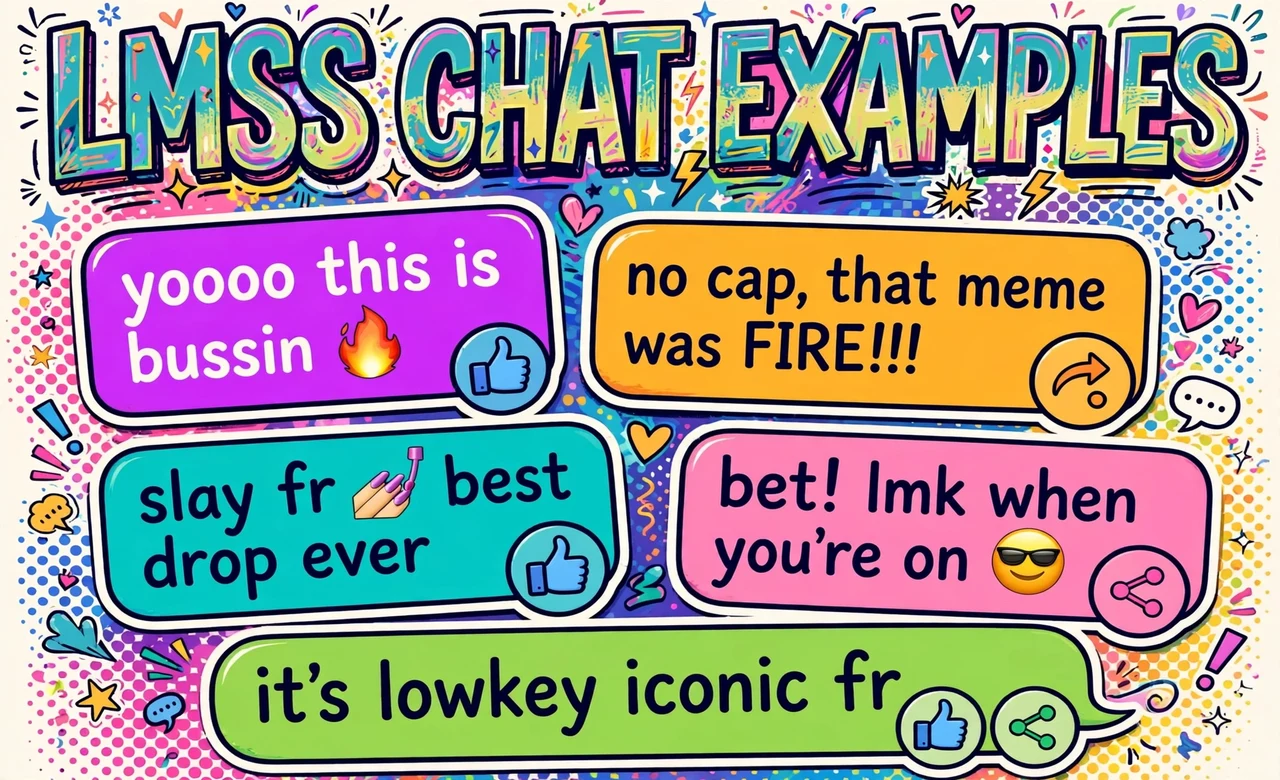
12 Real Chat Examples With LMSS
Reading about a meaning is one thing. Seeing it in a real conversation is another. These 12 chat examples show LMSS in the situations where it actually appears, with a short note under each one explaining which reading fits and why. The names are made up, but the patterns are real, drawn from the way people use LMSS on WhatsApp, Snapchat, Instagram, TikTok, and Facebook.
Example 1: WhatsApp Status
Sara: “Just uploaded my graduation pictures. LMSS!”
Meaning: Sara wants friends to like and share her graduation photos. This is the classic “Like My Status and Share” reading. The context is a status update, and the request is for engagement.
Example 2: Facebook Post
Mike: “New YouTube video is live! LMSS.”
Meaning: Mike wants people to like the video, share it, and subscribe to his channel. This is the “Like My Status, Share, and Subscribe” variant. The context is a video platform, so the third action applies.
Example 3: Instagram Story
Emma: “LMSS for today’s story.”
Meaning: Emma wants followers to interact with her Instagram Story by liking it and sharing it. The context is a Story, and the request is for engagement.
Example 4: Snapchat Story
Jake: “My Story is up! LMSS.”
Meaning: Jake wants friends to view and share his Snapchat Story before it disappears in 24 hours. On Snapchat, the tone is firmer, closer to “Like My Status Seriously”.
Example 5: Private Chat, Asking to See Something
Alex: “I just got the new shoes.” Ryan: “LMSS!”
Meaning: Ryan wants Alex to send a photo of the shoes. There is no post or status to like, so this is the “Let Me See Something” reading. The context is a private chat, and the request is to show something.
Example 6: Private Chat, Asking for Proof
Sophia: “I got an A on my exam!” Liam: “No way. LMSS.”
Meaning: Liam wants a screenshot of the exam result as proof. This is the “Let Me See Something” reading again. The tone is playful, and the request is to show evidence.
Example 7: TikTok Caption
Creator: “New dance video! LMSS and follow for part 2.”
Meaning: The creator wants viewers to like the video, share it, and follow the account. This is the TikTok version of “Like My Status and Share”, with “follow” standing in for “subscribe”.
Example 8: Group Chat, Birthday
Noah: “It is my birthday today! LMSS.”
Meaning: Noah wants the group to like and share his birthday status. This is the classic social media reading, and the tone is celebratory rather than demanding.
Example 9: Snapchat Chat, Emphatic Request
Mia: “Did you see my Story?” Ethan: “Yes, it was great.” Mia: “LMSS then!”
Meaning: Mia is serious about wanting Ethan to share her Story. The extra word “then” adds emphasis, and the reading is close to “Like My Status Seriously”.
Example 10: Funny Meme Thread
Zoe: sends a very funny meme Lucas: “LMSS!”
Meaning: Lucas is probably using the rare “laughing my socks off” reading, because the meme is funny and there is no post to like. This is the least common reading, and it only fits when the context is clearly humorous.
Example 11: Small Business Post
Aisha: “New collection is live in my shop. LMSS, it really helps small businesses.”
Meaning: Aisha wants customers and friends to like and share her product post. This is the “Like My Status and Share” reading, and the tone is warm and grateful rather than pushy.
Example 12: Asking for an Outfit Photo
Hannah: “I bought a dress for the party.” Olivia: “LMSS, I need to see it!”
Meaning: Olivia wants a photo of the dress. There is no status to like, so this is the “Let Me See Something” reading. The context is a private chat between friends.
Notice the pattern across all 12 examples. When LMSS sits next to a post, a status, a Story, or a video, it means “Like My Status and Share”. When it sits in a private chat where someone is asking to see something, it means “Let Me See Something”. When the tone is emphatic and the platform is Snapchat, it leans toward “Like My Status Seriously”. When the context is a joke, it can rarely mean “laughing my socks off”. If you remember this pattern, you will read LMSS correctly almost every time.
How to Reply to LMSS
Replying to LMSS is easy once you know which reading fits. The right reply depends on what the sender actually wants, so match your answer to the situation.
If someone posted a status, a photo, or a video with LMSS, and you liked it, say so in a short and friendly way. Good replies include “Done!”, “Shared already”, “Just liked it”, “Of course!”, “Happy to support”, and “Already did”. These replies are the ones the linezforlife.com guide recommends, and they work because they are short, positive, and clear. The sender knows immediately that you supported their post.
If you liked the post but you do not usually share other people’s content, you can be honest about it in a polite way. A good reply is “I liked it, but I usually do not share posts”. This is honest, it is kind, and it does not make the sender feel rejected. Most people accept this without any problem.
If someone sent LMSS in a private chat and they want to see something, the right reply is to send what they asked for. If they wanted a photo of your new shoes, send the photo. If they wanted a screenshot of your exam result, send the screenshot. If you are not comfortable sharing it, say so plainly: “I would rather not share that, but I can describe it”. A clear no is better than a confusing silence.
If someone sent LMSS on Snapchat and you think they want you to share their Story, view the Story first, then reply “Shared it” or “Done”. If you are not sure whether they want a share or want to see something, ask one short question: “Do you want me to share your Story, or do you want to see something?” That question takes two seconds and prevents a misunderstanding.
If someone sent LMSS after a joke and you think they mean “laughing my socks off”, you can reply with a laughing emoji or a short “Haha, same”. But be careful. Because the laughing reading is rare, the other person may have meant “Like My Status and Share” instead. If your reply does not match what they wanted, they will probably clarify, and then you can adjust.
The golden rule is simple. Match your reply to the context, keep it short, and stay friendly. LMSS is almost always a casual request between people who know each other, so a warm and simple reply is the right move.
Tone Guide: Friendly, Promotional, or Pushy?
LMSS is usually friendly, but its tone can shift depending on how it is written and where it appears. Understanding the tone helps you decide how to respond, and it helps you use LMSS well if you ever write it yourself.
The friendly tone is the most common. It appears when LMSS is paired with a smiling emoji, a heart, or a warm message. A friend who writes “New photo! LMSS” with a smiling face is asking for support in a light and happy way. A creator who writes “LMSS, thank you for supporting me” is showing gratitude. In both cases, the tone is warm, and the right response is a like, a share, or a kind comment.
The promotional tone appears when LMSS is used by a creator, a small business, or someone growing an audience. A YouTuber who writes “New video is live! LMSS” is promoting content. A shop owner who writes “New collection! LMSS” is promoting products. The tone is businesslike but still casual, and the request is a normal part of social media life. Most followers understand this and do not mind it, as long as it does not appear in every single post.
The pushy tone appears when LMSS is written in all caps, repeated many times, or sent directly to people who did not ask for it. A message that says “LMSS LMSS LMSS” with no other words feels demanding. A direct message that says “LMSS my post right now” feels like an order rather than a request. This tone is rare, but it happens, and it is the reason some people find LMSS annoying. If you receive LMSS in a pushy tone, you are under no obligation to comply. A polite “I will check it out” is enough.
The teasing tone appears in close friendships, especially on Snapchat. A friend who writes “LMSS” with a laughing emoji after posting a photo is teasing you, not ordering you. The message is really “Come on, you know you want to like my photo”. The right response is to play along: like the photo, send a laughing emoji back, or tease them in return.
If you use LMSS yourself, aim for the friendly tone. Add a smiling emoji, say thank you, and use it only occasionally. People support creators they like, and a warm request gets far more likes and shares than a demanding one.
LMSS vs LMS: What Is the Difference?
LMSS and LMS look almost identical, and many people confuse them, but they mean different things. The linezforlife.com guide includes a comparison table for exactly this reason, because the confusion is so common.
LMSS stands for “Like My Status and Share”. It is social media slang, it is casual, and it is used in chats, stories, and posts. When you see LMSS, the writer is asking for engagement with their content.
LMS is shorter, and its most common meaning is “Learning Management System”. A Learning Management System is a software platform that schools, universities, and companies use to deliver courses, track student progress, and manage online learning. When a teacher writes “Check the LMS for your homework”, they mean the learning platform, not a social media post. LMS is a professional and educational term, and it is used in schools and workplaces.
LMS also has a slang meaning, “Like My Status”, which is a shorter version of LMSS. When someone writes “LMS” on social media, they are asking for a like on their status, without the extra request to share it. This slang use is real, but it is less common than the educational meaning, and it is the reason the two abbreviations get mixed up.
Here is a simple way to remember the difference. If the conversation is about school, courses, or online learning, LMS means Learning Management System. If the conversation is about a social media post, LMS means “Like My Status”, and LMSS means “Like My Status and Share”. The extra S in LMSS stands for “Share”, which is the extra action the writer is asking for. When in doubt, look at the context. A teacher talking about homework is not asking you to like their status, and a friend posting a photo is not talking about a learning platform.
| Abbreviation | Meaning | Where It Is Used |
|---|---|---|
| LMSS | Like My Status and Share | Social media, chats, stories |
| LMS | Learning Management System (most common) | Schools, universities, workplaces |
| LMS | Like My Status (slang) | Social media posts |
When to Use LMSS and When Not To
LMSS is a useful abbreviation, but it works best in the right places. Using it in the wrong setting can make you look unprofessional or confused, so here is a clear guide to when it fits and when it does not.
Use LMSS when you are sharing a new status, posting a new photo, promoting a video, asking friends for support, or growing a social media presence. These are the situations the linezforlife.com guide lists, and they are the situations where LMSS feels natural. A friend who just posted graduation photos can write LMSS without anyone thinking twice. A creator who just uploaded a video can write LMSS and expect followers to understand. A small business that just launched a product can write LMSS and expect customers to help spread the word.
Use LMSS with friends, classmates, followers, and people who know you well. These are the audiences that understand internet slang and will not judge you for using it. A short “LMSS” at the end of a fun post feels like a friendly nudge, not a formal request.
Do not use LMSS in business emails, during professional conversations, in school assignments, in formal presentations, or when communicating with clients. The linezforlife.com guide lists these as places to avoid LMSS, and the advice is sound. In a work email, writing LMSS looks unprofessional, because the reader may not know what it means, and even if they do, it signals that you are treating a professional message like a social media post. In a school assignment, it looks sloppy. In a presentation to clients, it looks careless.
Do not use LMSS when you are talking to someone who does not use social media slang. Older relatives, formal contacts, and people from outside the social media world may not know what LMSS means, and they may feel confused or left out. In those cases, write the full request instead: “Please like and share my post”. It takes a few more seconds, but it is clear to everyone.
Do not use LMSS in every post. If every caption ends with LMSS, followers start to tune it out, and the request loses its power. Save it for posts that matter to you, like a new video, a milestone, or a product launch. When you use it rarely, people take it seriously. When you use it constantly, people ignore it.
Common Mistakes People Make With LMSS
Many people misunderstand LMSS, and the mistakes are easy to make. The linezforlife.com guide lists the most common errors, and this section explains each one so you can avoid it.
The first mistake is thinking LMSS is an insult. It usually is not. LMSS is a friendly request for engagement, not a rude remark. If someone sends you LMSS, they are asking for your support, not attacking you. The only time it feels rude is when it is written in a pushy tone, and even then, the letters themselves are not insulting.
The second mistake is assuming LMSS has only one meaning. As this article has shown, the sources disagree, and LMSS can mean “Like My Status and Share”, “Like My Status, Share, and Subscribe”, “Let Me See Something”, “Like My Status Seriously”, or rarely “laughing my socks off”. Context matters, and assuming a single meaning can lead to a wrong reply. Always check what the conversation is about before you decide what LMSS means.
The third mistake is using LMSS in formal emails. LMSS is intended for casual communication, and it looks out of place in a professional message. If you write LMSS in a work email, the reader may not understand it, and even if they do, it will make you look unprofessional. Write the full request instead.
The fourth mistake is confusing LMSS with LMS. LMSS and LMS have different meanings, and mixing them up can cause real confusion. LMS most commonly means Learning Management System, a platform used by schools and companies. LMSS means “Like My Status and Share”. If you write LMS when you mean LMSS, people may think you are talking about a school platform. If you write LMSS when you mean LMS, people may think you are asking them to like your post. The extra S matters.
The fifth mistake is overusing LMSS. Some people add LMSS to every post, every story, and every message. After a while, followers stop paying attention, and the request loses its effect. Worse, some followers find it annoying and may mute or unfollow the person. Use LMSS when you genuinely want support for something important, and skip it the rest of the time.
The sixth mistake is sending LMSS to strangers. If you send LMSS to someone who does not know you, they have no reason to like or share your content. The request only works with people who already follow you, know you, or care about your work. Sending it to strangers is unlikely to get a response, and it can feel like spam.
History: Where Did LMSS Come From?
LMSS does not have a single documented birth date, but its history follows the rise of social media itself. The grammarreader.com guide says LMSS became popular during the rise of social networking platforms, when users regularly posted status updates and wanted more engagement on their posts. That is the most honest summary of its origin. LMSS grew up alongside Facebook Status, WhatsApp Status, and Instagram Stories, all of which made short text requests a normal part of daily life.
The idea behind LMSS is older than the letters themselves. For as long as people have posted content online, they have asked friends to like and share it. In the early days of Facebook, people wrote full sentences like “Please like and share this post”. As social media grew faster and people posted more often, those sentences got shorter. “Like my status” became “LMS”, and “Like my status and share” became “LMSS”. The abbreviation saved time, and it matched the casual tone of social media.
The “Let Me See Something” reading likely came from a different path. In private chats, people have always asked each other to show them things, and “let me see” is a natural phrase. Shortening it to LMSS was a small step, and it happened in group chats and one to one conversations where speed matters more than clarity. The two readings grew up side by side, in different parts of the internet, which is why they both survive today.
The “Like My Status Seriously” variant probably came from Snapchat, where Stories disappear after 24 hours and users feel more urgency about engagement. Adding “seriously” to the request was a natural way to say “I really mean it, please do it now”. The “laughing my socks off” variant is a joke that plays on the letters, in the same tradition as LOL and LMAO, and it shows how internet slang keeps inventing new meanings for old letters.
LMSS is still a young abbreviation, and its meaning may keep changing. New platforms, new slang, and new generations of users will keep shaping it. For now, the safest way to understand it is the way this article presents it: “Like My Status and Share” is the most common reading, the other readings are real but context dependent, and the conversation around the letters tells you which one fits.
LMSS Meaning in Text: 14 FAQs
1. What does LMSS mean in texting?
It most commonly means “Like My Status and Share”. It is a request for friends or followers to like a post or status and share it with more people. In private chats, it can also mean “Let Me See Something”, depending on the context.
2. What is the full form of LMSS?
The most commonly cited full form is “Like My Status and Share”. A longer variant is “Like My Status, Share, and Subscribe”, which is used on video platforms where creators also want subscriptions.
3. What does LMSS mean on Snapchat?
On Snapchat, LMSS usually means “Like My Status Seriously”, according to meanvibe.com, or a request to view and share a Story, according to linezforlife.com. In a private Snapchat chat, it can also mean “Let Me See Something” when someone wants you to send a photo.
4. What does LMSS mean on Instagram?
On Instagram, LMSS asks followers to engage with a Story, Reel, or post by liking it and sharing it. Creators use it to give a new post an early push in the algorithm.
5. What does LMSS mean on TikTok?
On TikTok, LMSS means like my video, share it, and sometimes follow the account for more content. The “subscribe” part of the phrase really means “follow” on TikTok.
Conclusion
LMSS is a small abbreviation with a bigger story than most people expect. The lmss meaning in text that you will meet most often is “Like My Status and Share”, a friendly request for friends and followers to like a post or status and pass it on. On video platforms, the same letters stretch to “Like My Status, Share, and Subscribe”, adding one more action for creators who want subscribers as well as likes. In private chats, LMSS can mean “Let Me See Something”, asking you to send a photo, a screenshot, or proof. On Snapchat, it often leans toward “Like My Status Seriously”, and in rare joke threads it can mean “laughing my socks off”. Because the sources disagree, there is no single final answer, and the honest way to read LMSS is to look at the context around it.
The pattern to remember is simple. If LMSS sits next to a post, a status, a Story, or a video, it means “Like My Status and Share”. If it sits in a private chat where someone wants to see something, it means “Let Me See Something”. If the tone is emphatic and the platform is Snapchat, it leans toward “Like My Status Seriously”. The lmss meaning in texting, the lmss meaning on Snapchat, the lmss meaning on Instagram, the lmss meaning on WhatsApp, and the lmss meaning on TikTok all follow this same rule, and once you know it, you will never be confused by these four letters again.

Hi, I’m Alice, a writer at HubMeanings, where I make confusing words, slang, and phrases easy to understand.
I love exploring language and sharing clear, simple meanings with practical examples.